What Is the Anion Gap Formula with Potassium?
What Is the Anion Gap?
The anion gap is a derived measure used in blood chemistry to help assess electrolytes and overall acid-base balance. It comes from a standard blood test or electrolyte panel and is often used as a rapid clue in clinical assessment when a person has an electrolyte imbalance or a suspected metabolic disorder.
The principle behind the anion gap is simple: the body contains positively charged particles called cations and negatively charged particles called anions. Some are directly measured in routine testing, while others are not. The anion gap equation determines the difference between the main measured cations and measured anions, helping clinicians look for unmeasured anions that may be contributing to illness.
In practice, the anion gap is most useful in metabolic acidosis evaluation. It can help distinguish different causes of acid buildup and guide further testing. Because the result is derived from laboratory values, it is not a diagnosis by itself. Instead, it acts as a diagnostic marker that must be interpreted with the full clinical picture and other lab findings.
The main components that matter most are sodium, chloride, and bicarbonate. These values reflect the state of serum electrolytes in the blood. Some formulas also include potassium, which changes the calculation slightly and can affect the final number.
Anion Gap Formula With Potassium
The potassium-inclusive anion gap formula includes serum potassium to the cation side of the calculation. The most widely used version is:
Anion gap = Sodium + Potassium − Chloride − Bicarbonate
Using abbreviations, it is often written as:
AG = Na+ + K+ − Cl− − HCO3−
This version includes potassium because potassium is a measured positive ion, just like sodium. The formula sets measured cations against measured anions, which is why chloride and bicarbonate are taken away.
For example, if a person’s serum electrolytes are sodium 140, potassium 4, chloride 104, and bicarbonate 24, the calculation would be:
140 + 4 − 104 − 24 = 16
That is the simple calculation behind the potassium-included formula. Many clinicians and calculators also use a version that omits potassium, which is why it is important to know which formula your anion gap calculator is using.
Because potassium is usually present in a much lesser amount than sodium, adding it alters the result only slightly. Still, for some users, especially those comparing serial laboratory values, the change matters for clinical interpretation.
In what way the Anion Gap Calculator Operates
A anion gap calculator runs the specified formula to the values input from a blood chemistry test. Many calculators ask for the same core measurements: serum sodium, serum chloride, and serum bicarbonate. Several also allow potassium input so the calculator can use the potassium-included equation.
The procedure is straightforward:
- Enter the measured laboratory values from the electrolyte panel.
- Select whether potassium is included.
- The calculator runs the gap calculation automatically.
- The result is compared with a reference range or reference interval.
The calculator does not determine disease on its own. Instead, it assists with lab interpretation by helping identify whether the result is consistent with a high anion gap, a normal anion gap, or a low anion gap. This difference can influence the next step in evaluating acid-base status.
Some calculators also provide a corrected anion gap, which recalculates the result for albumin. This is helpful because low albumin can make the anion gap seem lower than it really is. In that case, the calculator becomes more useful for clinical assessment and acid-base status review.
In short, the calculator is a practical tool for converting serum values into an interpretable number that can support clinical interpretation. It works best when the user understands what the result means and which formula is being used.
Normal Anion Gap Range and Meaning
The normal range for the anion gap depends on the formula used, the lab technique, and the local normal interval. Because different labs may use different assays, there is no single number that applies everywhere.
With the potassium-included formula, the normal result is generally higher than with the potassium-excluded version. That is why it is essential to know the reference range tied to the specific calculation method.
In general, a result within the expected range suggests that measured cations and measured anions are in a typical balance. A result above the usual reference interval may suggest a increased anion gap, often seen in certain causes of acidosis. A result below the expected range may point to a reduced anion gap, which is less common but still clinically relevant.
Clinical interpretation depends on the full picture, including symptoms, other chemistry values, and whether the patient has an acid-base problem. For example, someone with acidosis and a high anion gap may need evaluation for causes such as acid accumulation or unmeasured toxins. Someone with a low anion gap may need assessment of albumin or possible lab issues.
It is also important to remember that the anion gap is not just a standalone number. It is a tool that helps interpret the state of acid-base regulation in context. If the value seems unexpected, the rest of the electrolyte panel and the overall clinical review matter just as much as the result itself.
When Potassium Is Included vs Left Out
The distinction between potassium inclusion and the traditional formula is straightforward: one version includes potassium, and the other leaves it out. The traditional formula is:
Anion gap = Sodium − Chloride − Bicarbonate
The modified formula that includes potassium is:
Anion gap = Sodium + Potassium − Chloride − Bicarbonate
Most modern clinical settings typically use the potassium-excluded version because potassium is a minor contributor relative to sodium, and leaving it out reduces complexity in the math. However, some clinicians and calculators still use the modified formula because it is a more thorough reflection of measured cations.
The actual variation is usually about the potassium value itself, often around 3 to 5 mEq/L in many adults. That means the potassium-included number will be slightly higher than the traditional formula result. When comparing older and newer reports, this difference can make a difference.
The choice of formula affects how the result is compared with the lab’s reference range. A modified formula may have a distinct normal interval than the traditional one. This is why the calculator should explicitly show whether potassium is included.
For users looking at a metabolic acidosis workup, this distinction helps reduce ambiguity. A value that seems abnormal under one formula may be normal under the other. Good interpretation depends on aligning the formula to the correct laboratory values and reference interval.
Frequent Causes of a Elevated or Reduced Anion Gap
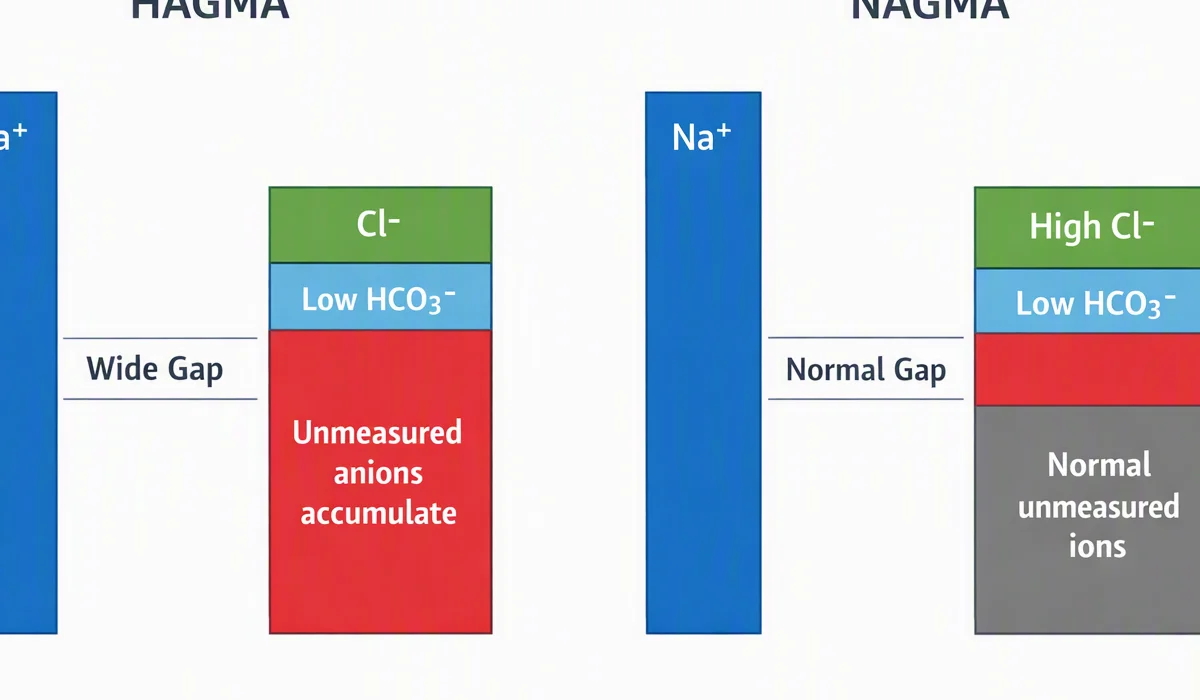
A raised anion gap often appears in metabolic acidosis. This is seen when acids collect in the bloodstream or when unmeasured anions increase. Typical causes include lactic acidosis, ketoacidosis, kidney failure, and toxin exposure. When this occurs, the anion gap helps identify a metabolic imbalance that is changing the body’s pH balance.
A high result is a clue, not a final diagnosis. It tells clinicians that the blood chemistry suggests extra acids or unmeasured anions are present. This is why the anion gap is such a useful diagnostic clue during patient assessment.
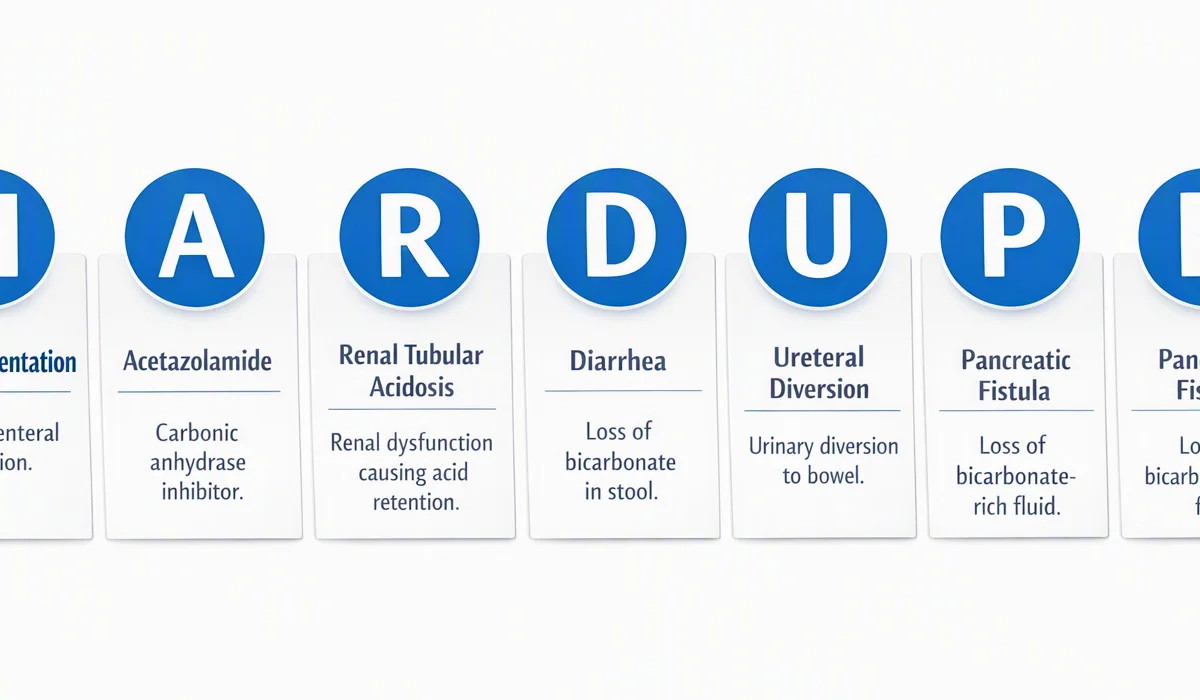
A within-range anion gap does not rule out illness. It may be seen in non-gap acidosis, where bicarbonate is lost and chloride rises to compensate. This may be seen in diarrhea, renal tubular problems, or certain treatments. In this setting, the anion gap stays within the expected normal range even though acid-base status is abnormal.
A decreased anion gap is less common but can be associated with low albumin, laboratory issues, or unusual changes in measured cations. Because albumin is a major unmeasured anion, a reduction in albumin can lower the gap. In certain cases, a recalculated anion gap should be calculated to avoid underestimating the abnormality.
Other possible causes of a low result include certain medications, high levels of unmeasured cations, and testing error. Because of this, a low value should be reviewed carefully and repeated if needed.
Recognizing these patterns helps with clinical interpretation. The anion gap is most helpful when considered alongside the complete electrolyte panel, the patient's symptoms, and the wider context of acid-base status.
Illustrative Example
Here is a basic example using realistic sample values from an electrolyte panel:
- Na: 140
- K: 4
- Cl: 103
- HCO3: 25
Computation steps for the potassium-included formula:
1: Sum sodium and potassium: 140 + 4 = 144
2: Combine chloride and bicarbonate: 103 + 25 = 128
Step 3: Subtract: 144 − 128 = 16
Outcome: The anion gap is 16.
When the same numbers are entered into the traditional formula that omits potassium, the computation is:
140 − 103 − 25 = 12
This demonstrates how potassium inclusion affects the result. Either result can be correct, but they belong to different formulas and different reference range expectations.
If a calculator user is reviewing results over time, it is essential to use the same formula each time. In that case, the change may stem from the formula rather than a real shift in acid-base status. That is one reason the anion gap calculator should clearly identify the formula being used.
Caveats and Clinical Perspective
The anion gap is valuable, but it has caveats. The result can be affected by lab error, sample issues, or differences in measurement methods. That means https://anion-gap-tracker244.cavandoragh.org/how-albumin-levels-alters-the-anion-gap-and-calculation-results a single number should not be used alone to reach a conclusion.
Another limitation is that the anion gap does not directly measure all acids or all electrolytes. It is an indirect estimate based on selected blood electrolytes. Because of this, the number is best understood as part of broader medical context.
Acid-base disorders can also be multifaceted. A person may have more than one process at the same time, such as metabolic acidosis plus metabolic alkalosis, or a disorder with a normal anion gap even though bicarbonate is low. In these cases, the gap is only one part of the puzzle.
Serum albumin deserves special attention because it strongly influences the result. When albumin is low, the measured anion gap may look falsely normal or low. This is why correction for albumin is sometimes necessary to reveal the true degree of abnormality.
Finally, the anion gap should always be interpreted with the rest of the clinical picture. Symptoms, history, medication use, and the complete blood chemistry test matter. A good clinical assessment combines the number with the patient’s condition rather than relying on the calculation alone.
Frequently Asked Questions
What is the potassium-inclusive anion gap formula?
The potassium-included formula is anion gap = sodium + potassium − chloride − bicarbonate. In symbols, that is Na+ + K+ − Cl− − HCO3−. This version counts potassium as one of the measured cations.
Does the anion gap calculator use potassium?
It depends on the calculator and the formula being used. Some anion gap calculator tools include included potassium, while others use the traditional formula without potassium. Always check which method the calculator is set to use before interpreting the result.
What is a normal anion gap value?
A normal range varies with the formula and the lab’s reference range. The potassium-containing version is generally above the potassium-removed version. Because methods differ, the safest approach is to match the result with the lab’s stated reference interval.
What does a high anion gap mean?
A high anion gap may point to metabolic acidosis with additional acids or unmeasured anions in the blood. Common causes include ketoacidosis, lactic acidosis, kidney failure, and certain poisonings. The result should be interpreted with the full clinical context.
How does albumin affect the anion gap?
Albumin is a key unmeasured anion, so low albumin can make the anion gap appear lower than expected. In that situation, a corrected anion gap or albumin correction may be needed for accurate clinical interpretation.