Serum Anion Gap Calculator for Interpreting Electrolytes
What the Anion Gap Calculator Measures
An anion gap calculator is used to estimate the serum anion gap, a calculated value used to assess electrolyte balance and guide acid-base status interpretation. It does not directly measure a single substance directly. Instead, it relies on common values from a blood chemistry test or electrolyte panel to estimate the difference between measured cations and anions in the serum.
Clinically, the anion gap is most useful when evaluating metabolic acidosis. A widened result can indicate unmeasured acids in the blood, while a normal result can indicate a different type of acid-base disturbance. That makes the calculation a useful screening and assessment tool, especially when a provider needs to interpret an abnormal lab result in context.
The value is not a diagnosis by itself. It is a clue. A higher-than-expected gap can suggest acid accumulation, while a normal gap may still occur with metabolic acidosis if bicarbonate loss is balanced by chloride gain. This is why the anion gap calculator is most valuable as part of a broader clinical picture rather than as a standalone number.
In practice, the calculation helps identify patterns such as high anion gap acidosis, normal anion gap acidosis, and the need for additional testing. Used well, it can guide next steps in diagnostic reasoning and help narrow the cause of an electrolyte or acid-base imbalance.
Calculating Anion Gap
The usual formula for the anion gap uses sodium, chloride, and bicarbonate. Most calculators use this simple equation:
Anion gap = sodium − (chloride + bicarbonate)
For example, if sodium is 140, chloride is 104, and bicarbonate is 24, the calculation would be 140 − (104 + 24) = 12. That number becomes the reference value you use to assess against the expected reference range.
Why these measurements? Sodium is the primary measured cation in the sample, while chloride and bicarbonate are the primary measured anions. The result reflects the amount of unmeasured ions left over after the major measured ions are accounted for. This makes the anion gap a helpful indicator of hidden acids or other unmeasured substances.
Some laboratories and clinicians also use a potassium-inclusive formula, though the sodium-based version is more widely used in routine use. Regardless of the version, the goal is the same: determine a clinically meaningful number that helps interpret acid-base and electrolyte findings.
When using an anion gap calculator, it is important to verify the units and the exact lab values from the same sample. Small changes in sodium, chloride, or bicarbonate can shift the result, so the calculation should always be paired with the full clinical context.
Normal Anion Gap Range & Reference Values
The reference range for the anion gap depends on the testing method, analyzer, and local lab variation. That is why you should always check the result with the lab’s own reference interval instead of using only a single universal cutoff.
In many settings, a typical reference interval is roughly in the low-to-mid teens when calculated without potassium. But the exact threshold can differ because measurement methods, calibration, and analyzer type affect the final number. A result that seems slightly abnormal in one lab may still fall within another lab’s accepted range.
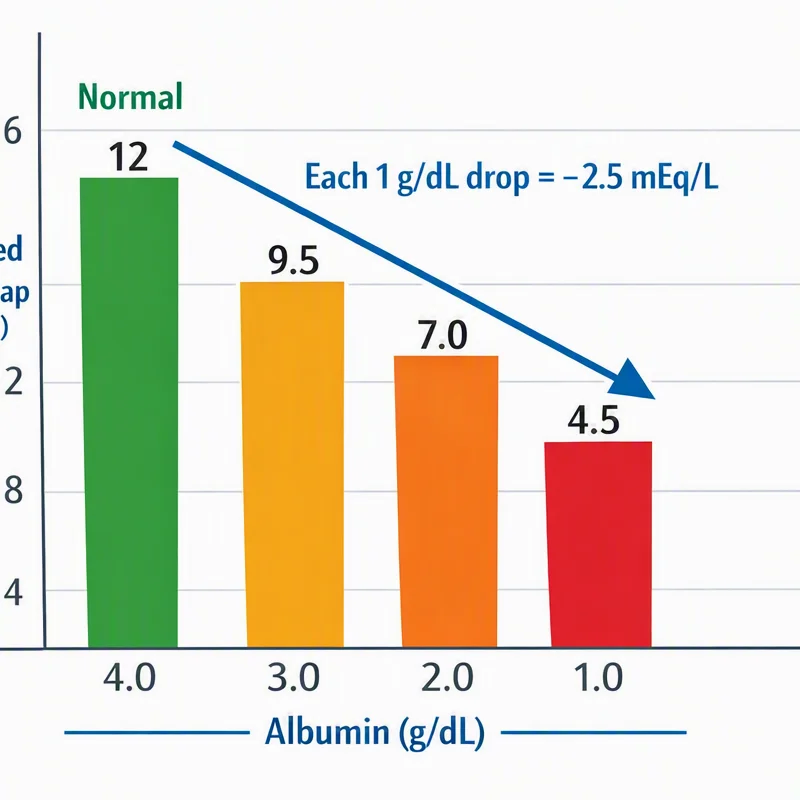
Albumin is one of the main factors influencing the anion gap. Because albumin is a major unmeasured anion, lower albumin levels can make the gap appear falsely low or less elevated than expected. This is why a result should not be interpreted in isolation, especially if the patient has low protein states or significant illness.
When reviewing the result, determine whether the number is truly abnormal relative to the local reference interval and whether any conditions could alter the measurement. The most useful interpretation comes from combining the calculator result with the patient’s symptoms, other electrolytes, and the overall acid-base picture.
How to Interpret a High Anion Gap
A high anion gap typically suggests there are additional unmeasured acids in the blood. This pattern often points toward higher acid generation, reduced acid clearance, or exposure to an ingested substance that changes acid-base chemistry. In many cases, it is the main clue that metabolic acidosis is present.
Common causes include lactic acidosis, ketoacidosis, and toxic ingestion. Lactic acidosis can occur when tissues are underperfused or oxygen delivery is impaired, leading to excess lactate and a rising gap. Ketoacidosis may develop with uncontrolled diabetes, prolonged fasting, or alcohol-related metabolic stress, and it also increases unmeasured acids.
Toxic ingestion is another important category. Substances such as toxic alcohols can create a marked acid-base disturbance and elevated gap. In these cases, the anion gap calculator can help identify the pattern early, but further diagnostic testing is necessary to confirm the cause and severity.
Other clues matter. A high gap with low bicarbonate, abnormal pH, and symptoms such as rapid breathing or confusion suggests clinically significant metabolic acidosis. The result should prompt a broader assessment of the patient’s condition, not just the lab numbers. In many situations, the gap is one of the first signs that an urgent cause is present.
How to Read a Normal Anion Gap Acidosis
A normal-gap metabolic acidosis can be equally important as a elevated-gap pattern. In this setting, bicarbonate decreases, but chloride goes up to maintain electroneutrality. That rise in chloride is why this pattern is also called chloride-rich metabolic acidosis.
Two major causes are diarrhea and renal tubular acidosis. Diarrhea can cause direct bicarbonate loss from the gastrointestinal tract. The body reacts by retaining chloride, which keeps the measured gap from widening even though acid-base balance is disturbed. Renal tubular acidosis occurs when the kidneys cannot properly acidify the urine or conserve bicarbonate, again producing a normal-gap pattern.
The concept of chloride shift is important here. As bicarbonate decreases, chloride often increases in a inverse manner, preserving the measured anion gap. That is why a normal gap does not rule out acidosis. It simply suggests a different mechanism than unmeasured acid accumulation.
When evaluating this pattern, it helps to look at the blood chemistry test as a whole. Sodium, chloride, and bicarbonate should be reviewed collectively, along with kidney function, volume status, and GI losses. If the acid-base picture suggests metabolic acidosis but the gap is normal, the next step is usually to look for bicarbonate loss or impaired renal handling.
Correction for Albumin and Corrected Anion Gap
Hypoalbuminemia can strongly alter the interpretation of the anion gap because albumin is a primary unmeasured negative ion. When albumin is low, the measured gap may be falsely lower than expected. That is why albumin correction is often recommended when clinical suspicion is high and the raw number seems unusually normal or only mildly elevated.
The corrected anion gap, sometimes called the adjusted anion gap, takes into account reduced albumin and gives a more precise picture of acid-base status. The exact correction approach can differ by facility, but the principle is consistent: if albumin is low, the gap should be adjusted upward to more clearly represent the true level of unmeasured acids.
This adjustment is especially helpful in patients with low protein levels due to illness, malnutrition, liver disease, or inflammation. Without correction, a clinically important high-gap acidosis could be not recognized or underestimated. That can affect decision-making and postpone further evaluation.
In practical terms, the corrected value should be considered alongside the original result rather than replacing it. The unadjusted number shows what https://anion-gap-reader788.lumenforgex.com/posts/anion-gap-calculator-for-kidney-function-assessment the lab measured from sodium, chloride, and bicarbonate. The corrected number helps interpret whether hypoalbuminemia is masking a significant disturbance in acid-base balance.
Common Causes of Abnormal Results
Atypical anion gap values often suggest underlying disease rather than a problem with the calculation itself. A elevated gap may be linked to kidney disease, which limits acid excretion and can contribute to metabolic acidosis. Poor renal clearance can allow acids to accumulate, especially when kidney function is greatly impaired.
Dehydration can also influence the result. Volume depletion may concentrate blood values and contribute to kidney stress, which can worsen acid-base abnormalities. In some cases, dehydration occurs alongside lactic acid buildup or other metabolic stressors, making the interpretation more nuanced.
Poisoning is another major category. Certain ingestions can produce a high-gap pattern and require urgent action. Toxic alcohols are especially worrisome because they may initially cause subtle symptoms while the gap widens as toxic metabolites accumulate. Recognizing this pattern early can be vital.
Lactic acid elevation is another common contributor to abnormal results. Whether due to poor tissue perfusion, severe infection, exertion, or other stress, elevated lactate can raise the gap and signal a clinically important process. The key is to match the lab pattern with the patient’s history, physical findings, and other labs.
When to Use This Calculator
Use anion gap calculator when reviewing a blood chemistry panel or electrolyte panel and you need quick diagnostic support. It is especially helpful when the goal is to review electrolytes, assess suspected metabolic acidosis, or compare the result with the expected reference range.
The calculator is especially helpful during clinical assessment of patients with unexplained illness, abnormal bicarbonate, kidney dysfunction, vomiting or diarrhea, altered mental status, or possible toxin exposure. In these scenarios, the anion gap can quickly point the clinician toward elevated-gap or normal-gap acid-base patterns.
It is also useful for trend monitoring. Repeating the calculation over time can indicate whether treatment is helping reduce the metabolic disturbance or whether the imbalance is worsening. This makes it a practical component of ongoing care, not just a one-time screening test.
Keep in mind that the calculator is not a substitute for clinical judgment. It is one part of a broader clinical workup that may include repeat labs, blood gas analysis, lactate, ketones, kidney studies, or toxicology testing. The most accurate interpretation comes from pairing the formula output with the patient’s overall presentation.
Frequently Asked Questions
How do you calculate the serum anion gap?
The standard anion gap calculation is: sodium − (chloride + bicarbonate). The formula estimates the serum anion gap from a routine blood chemistry test and helps assess acid-base balance. Anion Gap Calculator performs the same calculation automatically once you enter the values.
What is a normal anion gap range?
The reference range depends on the laboratory, analyzer, and local lab variation. Many labs report a normal range in the low-to-mid teens, but you should always use the specific interval provided with the result. The most accurate interpretation comes from comparing the number to the lab’s own reference interval.
Why is albumin correction important for the anion gap?
Albumin correction matters because hypoalbuminemia can make the gap look lower than it really is. Since albumin is a major unmeasured anion, low levels can hide a clinically important acid-base abnormality. A corrected anion gap gives a better estimate of the true disturbance.
What causes a high anion gap?
A high anion gap is commonly caused by lactic acidosis, ketoacidosis, kidney failure, and toxic alcohols or other forms of toxic ingestion. It usually indicates that unmeasured acids are accumulating in the blood. The pattern should prompt further clinical evaluation rather than being used as a diagnosis on its own.
Can a normal anion gap still signal metabolic acidosis?
Yes. A normal anion gap can still occur with metabolic acidosis, especially in normal anion gap metabolic acidosis resulting from diarrhea or renal tubular acidosis. In these situations, bicarbonate loss is offset by increased chloride, so the gap remains unchanged even though acid-base balance is abnormal.